
10 Wash & Wear Fabric Care Tips to Make Your Clothes Last Longer
You must have had the experience of taking clothes out from the laundry to see them faded, shrunk, and disfigured in some way. And yet, most of the damage that happens to clothes can be completely avoided.
Why do people love to wash & wear fabric? Because it is easy to maintain, wrinkle-free and ideal for daily use – whether you are getting stitched clothes or purchasing ready-made unstitched fabric. However, “easy-to-maintain” does not mean that it requires zero effort. Here are a few things that would help you keep your clothes in mint condition for years to come.
The following article contains practical tips and tricks to take proper care of your clothes without using complex jargon.
Why Fabric Care Actually Matters
Clothes aren’t cheap, and neither is your time spent shopping for replacements. Proper care isn’t just about looks — it’s about getting the full value out of every piece you own.
Whether it’s a crisp cotton shirt, a wash & wear suiting fabric, or your favorite casual wear, the right care routine keeps colors vibrant, fabric strong, and shape intact. Think of it as an investment that pays you back every time you get dressed.
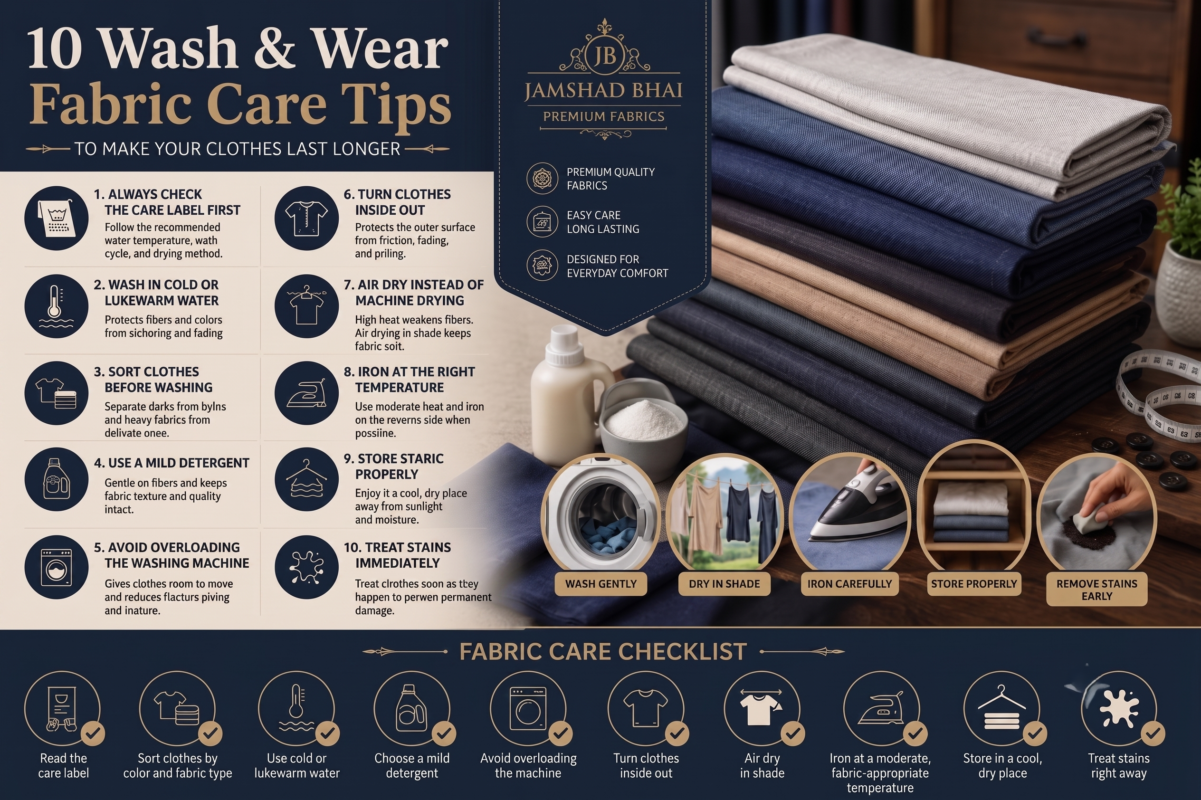
10 Wash & Wear Fabric Care Tips
1. Always Check the Care Label First
It might seem like a no-brainer, but most people overlook this part completely. This is where the instructions for washing, which include how hot the water should be, what type of cycle to use, and how to dry the material. The unstitched fabric differs greatly according to its blend.
2. Wash in Cold or Lukewarm Water
The use of hot water is among the leading factors that cause shrinking and fading. Cold or warm water should be used in cleaning fabrics labeled wash and wear since they will do the work just fine without damaging anything.
3. Sort Clothes Before Washing
Sort your laundry into lights and darks and into heavy and delicate fabrics. Combining them will result in fabric dyeing and uneven wear. Just by doing this, you can increase the life span of your clothing.
4. Use a Mild Detergent
Aggressive detergents remove the natural feel from fabric and also cause early wear and tear. A milder and effective detergent does not exert much pressure on the fabric and yet cleans just as well. In the case of fabrics with delicate prints for men, this factor becomes extremely significant.
5. Avoid Overloading the Washing Machine
The reason why you should not cram all your clothes together is that they will be washed poorly, and the increased friction will increase the chances of your garments being pulled or torn.

6. Turn Clothes Inside Out
The fabric is thus protected from the effects of rubbing, fading, and pilling on its surface. This is particularly useful for printed or textured wash and wear fabrics.
7. Air Dry Instead of Machine Drying
The machine dryer works through the application of very hot temperatures, leading to weakening of the fibers and shrinkage. The best method would be air drying under the shade as opposed to direct sunshine.
8. Iron at the Right Temperature
Wash & Wear fabrics require less ironing, but whenever ironing becomes necessary, ensure that the temperature is not too high because excess heat may burn the fibers or create a sheen on the fabric surface. Always iron from the backside where possible.
9. Store Fabric Properly
Store heavy materials by folding and light materials by hanging. Keep the clothing material stored in a cool and dry location that does not receive direct exposure to sunlight or moisture because this can result in mildew growth and fading colors.
10. Treat Stains Immediately
A stain left on fabric for an extended period of time becomes difficult to clean and causes more harm to the fabric than if the stain had been treated promptly at the first sign of it.
Fabric Care Checklist
Use this quick checklist before, during, and after every wash:
- Read the care label
- Sort clothes by color and fabric type
- Use cold or lukewarm water
- Choose a mild detergent
- Avoid overloading the machine
- Turn clothes inside out
- Air dry in shade
- Iron at a moderate, fabric-appropriate temperature
- Store in a cool, dry place
- Treat stains right away
Common Mistakes That Reduce Fabric Lifespan
Even careful people fall into these traps without realizing it:
- Washing everything in hot water “to be safe”
- Ignoring the care label completely
- Using excessive detergent, thinking it cleans better
- Drying clothes under direct sunlight
- Ironing at high heat on delicate fabric
- Leaving stains untreated for days
- Storing clothes in damp or humid spaces
Any one of these habits can quietly shorten the life of your clothing, even if the fabric itself is high quality.
Do’s and Don’ts for Wash & Wear Fabric Care
| Do’s | Don’ts |
| Wash in cold or lukewarm water | Use hot water for regular washes |
| Follow the care label instructions | Ignore fabric-specific washing guidance |
| Turn clothes inside out before washing | Wash prints and textures face-out |
| Air dry in shade | Dry clothes in direct sunlight |
| Iron at a moderate temperature | Use high heat on delicate fabric |
| Store clothes in a cool, dry space | Leave clothes in humid or damp storage |
| Treat stains immediately | Wait until laundry day to treat stains |
Final Thoughts
Taking care of wash & wear fabrics does not entail much effort, but consistency would be a huge factor. Simple actions such as selecting the appropriate water temperature, ironing well, and proper storage of garments could go a long way in making sure that your wardrobe will stay with you for years.
For those who are looking for unstitched fabric to tailor or simply maintain their daily wear clothes, these tips on how to take care of wash & wear fabric may be useful.
For high-quality wash & wear fabric, check out our selection at jamshadBhai.com!
FAQs
1. What does “wash & wear” fabric mean?
Wash & wear fabric is designed to be low-maintenance — it resists heavy wrinkling and can be worn shortly after washing without extensive ironing.
2. Can I machine dry wash & wear fabric?
It’s best to air dry wash & wear fabric whenever possible. Machine drying uses high heat, which can weaken fibers and cause shrinkage over time.
3. What temperature should I iron wash & wear fabric at?
A moderate, low-to-medium heat setting is usually safest. Always check the care label, and iron on the reverse side to protect the fabric surface.
4. How should I store unstitched fabric to keep it in good condition?
Keep it folded in a cool, dry place away from direct sunlight and moisture to prevent fading, mildew, or fiber damage.
5. Why does my fabric fade or shrink even with careful washing?
Common causes include hot water, direct sunlight during drying, harsh detergents, and overloading the washing machine — all of which stress the fibers over time.