
How to Identify High-Quality Fabric Before Buying: 14 Expert Tips
Shopping for fabrics is quite complicated. The fabric looks great while choosing it at the retail store but it will wrinkle, bleed on first wash or tear as soon as it is worn. It is one of the commonly faced issues by the retailers, boutique owners and consumers in Pakistan.
Being aware of the high-quality fabric before purchase will help you save your time, money and energy. Consumers usually get trapped and buy the fabric on the basis of its look or color without focusing on its quality, texture and weave. This is a comprehensive guide about high-quality fabrics.
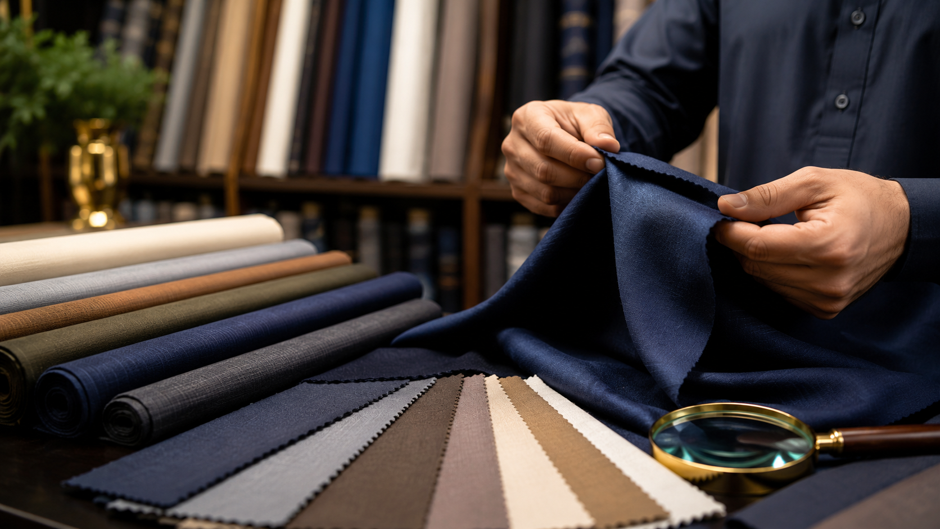
Why Fabric Quality Matters
Fabric quality really has an impact on things like comfort, and the lifespan of the clothes.
In fact, the cheapest fabric will be prone to problems right from the beginning such as shrinkage or fading colors or roughness after only a few washes.
If a product is of poor quality, customers will not be satisfied and will not order again. It would be better if clothes don’t end up in the laundry within a matter of days or months of purchase. Understanding the different aspects of fabric quality not only helps to be careful about your own investments but also gives you the means to be trustworthy if you are doing clothes resale.
15 Expert Tips to Identify High-Quality Fabric
1. Check Fiber Composition
A simple way is to see the label of the fiber content or to ask the seller about it. In case of natural fibers like cotton silk and linen the fabric is breathable, but with blends the durability as well as the feel will be different.You can say this is the key first step in a quality fabric check.
2. Feel the Texture
Use your hands to touch and sense the fabric.
A high-quality fabric is generally smooth, even and has a certain heaviness when held in hand.
Whereas if it is rough with some bumps on its surface or on the other hand, it is very thin and paper-like the quality will most probably not be that great.
3. Examine the Weave
Bring the fabric close to a light source and observe the weave structure. The fabric which has tight and uniform threads probably has fewer spaces between the threads, therefore, it is likely to be a stronger and more lasting fabric.
4. Test Durability
Apply slight force to stretch the fabric in varying directions. The fabric of good quality will not get tears and when released it would go back to its original shape without any lasting marks.
5. Inspect Stitching
Making sure if the garment bought is fully stitched or half-stitched, take a close look at the seams. Well done seam with uniform and neat stitching without any loose threads is a very good indicator of excellent craftsmanship.”
6. Look for Color Consistency
Try the piece outdoors if possible because sometimes lighting inside retailers doesn’t reveal certain color inconsistencies well. Color variations must be avoided as much as possible and the fabric should have a smooth transition of color from one shade to another. In other words no color variations should be visible.
7. Do a Quick Colour Rub Test All you need is a white, slightly damp cloth. Rub it against the fabric you are checking for colourfastness, especially at the seam lines. If you see that the cloth takes on too much of the colour of the fabric it may mean that when you are going to wash it, this colour can still rub onto other fabrics.
8. See if Fabric is Shrink Proof
A major point to be discussed with the seller is whether he has done any form of pre-shrinking treatment to his cottons. The reason why this detail is relevant for retailers is that if the fabric after cutting and sewing is washed, the garment might shrink.
9. Test Recovery From Stretch
Grab and stretch a piece of fabric, then let it go. The quality fabric, say a cotton-terry one or elastane mix, should quickly bounce back to its original condition.
10. Assess Wrinkle Resistance
If a customer’s satisfaction depends on the appearance of the garment, this test is very helpful. Take one corner of the fabric, scrunch it tightly like wrapping in a fist, hold there for some moments, and then let the fabric unfold by itself. The fabric resistant to wrinkles will have little to no creases, while the fabric requiring constant ironing is likely to have more than usual creases which indicate low fiber quality.
11. Fabric Breathability Test
Fabric that you intend for summer wear, check how well it breathes. A way that many people test it is to hold the woven fabric up to a light where you can see what’s on the other side of the fabric because light has been able to pass through it. Similarly, air should also move through the fibers easily for the fabric to feel cool to the wearer.
12. The Reputable Maker
Do an investigation on the source of the fabric i.e. the manufacturer. Those textile mills and fabric factories whose names are well entrenched in Pakistan’s textile industry especially Faisalabad and Karachi areas are mostly the ones that keep up the fabric quality level on a continuous basis.
13. Fabric Certificates (if any)
Some types of fabrics which have high requirements like organic cloth or export quality, should have certificates of their kind like OEKO-TEX. Nevertheless, many domestic fabrics have no formal certificate, it would be great nevertheless to see a manufacturer who gives certifications.
14. Supplier Trust
Making an educated choice and finding suppliers with excellent customer service should be your top priority as they know that quality is one factor that defines a customer’s decision.
Common Signs of Poor-Quality Fabric
Watch out for these warning signs before you buy:
- Uneven texture or visible slubs in the wrong places
- Thin, see-through areas in the weave
- Strong chemical smell straight out of the packaging
- Colors that rub off easily onto your hands
- Fabric that feels stiff or plastic-like instead of natural
- Loose threads or fraying edges on the roll
If you notice two or more of these signs, it’s best to ask questions or choose a different fabric.
Tips for Buying Fabric Online in Pakistan
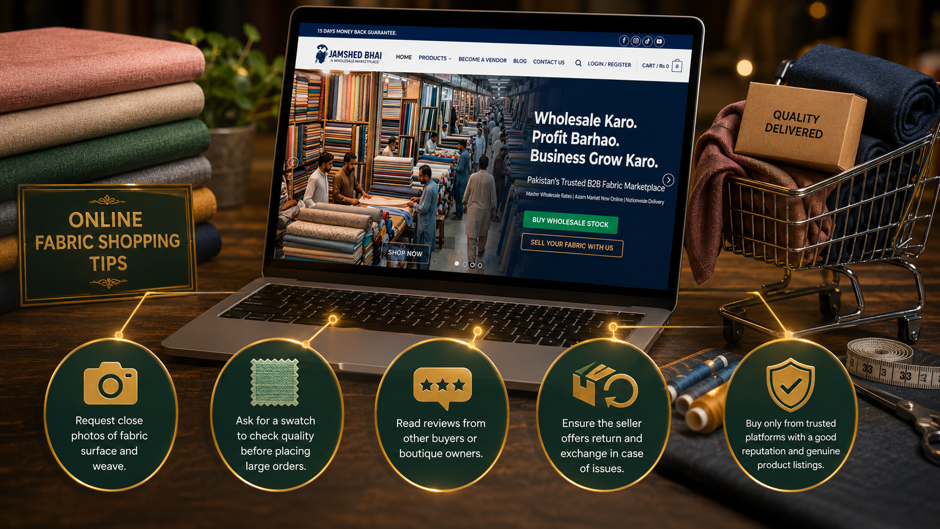
Online fabric shopping has really taken off in Pakistan but since the buyer cannot touch/feel the fabric prior to placing their order there is always a risk involved. Here is a list of tips to consider:
- Talk to the sellers and request that they send very close photographs of the fabric surface and the weave pattern.
- Ascertaining the fabric qualities by requesting a swatch would be a safe measure before ordering in large quantities or wholesale.
- Reading testimonials of other retailers or boutique proprietors who had procured fabrics online could be very helpful.
- In case the fabric received is unsatisfactory it is important that the seller allows for return and exchange.
- It would be wise to limit your purchases to platforms that you have come across repeatedly, that exclusively handle quality fabrics, and maintain good business reputations with genuine product listings.
In fact, online fabric shopping can be a very rewarding experience as long as you follow these few precautionary measures.
Conclusion
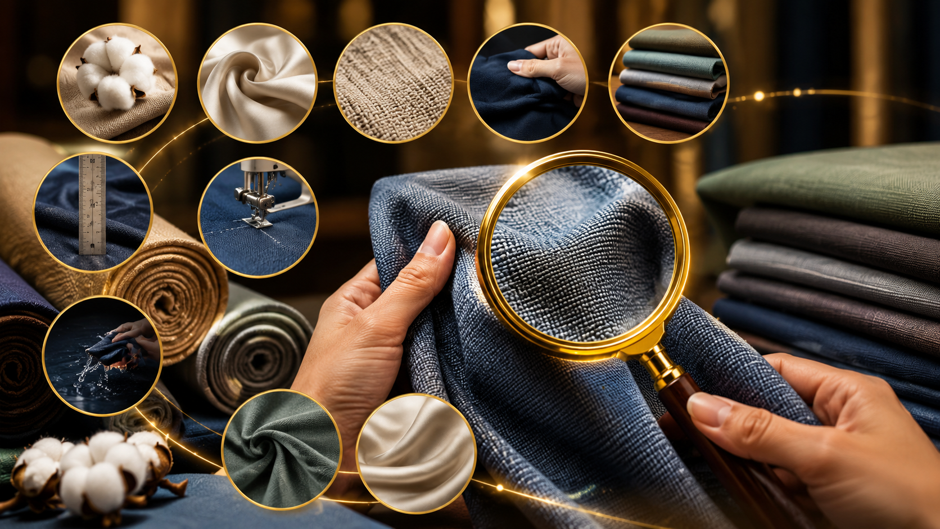
Anyone can learn to spot a quality fabric without years of training or experience. It just comes down to closely inspecting the fiber, weave, thickness, and finish of the fabric.
You should treat these 14 points as a guide whenever you make a fabric purchase, whether it is a wholesale order for a boutique or a fashion piece for individual use.
Should you be ready to get hands on fabrics that satisfy these criteria, please refer to JamshedBhai.com’s collection for premium men’s fabric where quality control and wholesale pricing are seamlessly integrated under one roof.
Frequently Asked Questions
How can I identify good-quality fabric?
Check the fiber content, feel the texture, examine the weave tightness, and test for colorfastness and stretch recovery. Combining a few of these checks gives a reliable picture of overall quality.
Which fabric lasts the longest?
Tightly woven natural fibers like good-quality cotton, wool, and linen tend to last longest when cared for properly. Fabric with a higher GSM also generally holds up better over time.
What is the best fabric for men’s clothing?
For men’s fabric, breathable cotton blends work well for shirting, while wool and wool blends are popular for suiting due to their durability and structure.
How do I avoid fake fabric sellers?
Buy from established, trusted suppliers with verifiable reviews and clear return policies. Avoid sellers who refuse to share fiber details, GSM information, or close-up fabric photos.
Where can I buy premium fabric online in Pakistan?
Trusted wholesale marketplaces like JamshedBhai.com offer a wide range of inspected, quality-checked fabric, making it easier for retailers and individual buyers to shop with confidence.