
How to Choose the Right 3-Piece Suit for Every Occasion in Pakistan: A Complete Guide for Women
You open up a shopping page and find fifty suits that all seem beautiful in their own right. You have a printed lawn suit, a suit with elaborate embroidery on the neckline, and a jewel-colored suit with a net dupatta. So, which is right for your Friday lunch party? And which is suitable for your cousin’s mehndi?
The problem with most purchases is in picking a suit based on how it looks rather than where it needs to be worn. The aim of this guide is to do exactly the opposite – start with the occasion, the climate, and the time of wearing, then narrow down the choices of fabrics, designs, colors, and styles. This guide will also give some tips on ordering a stitched 3-piece suit online.
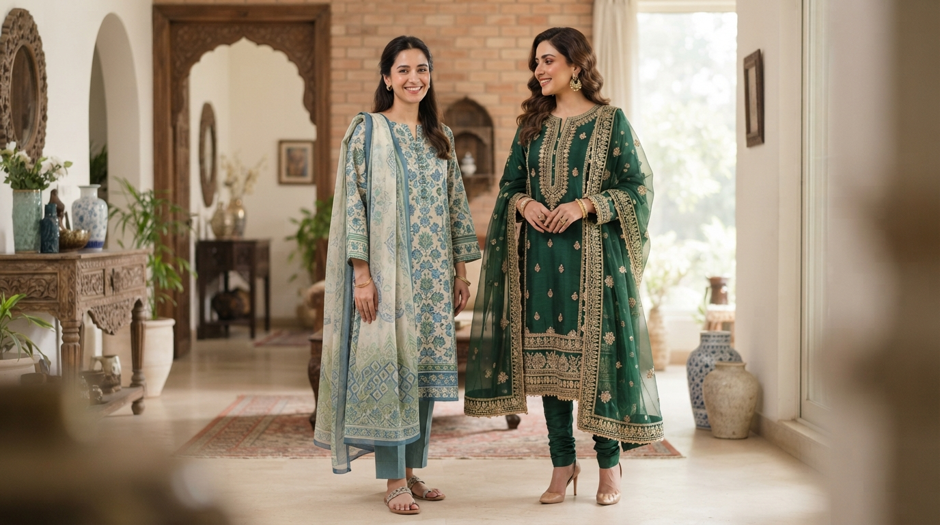
Why a 3-Piece Suit Is a Practical Choice for Pakistani Women
A 3-piece suit solves a problem that separates and one-piece outfits don’t: coordination. The shirt, trouser and dupatta are chosen to work together, so you skip the hunt for a matching bottom or a dupatta that doesn’t clash.
The practical advantages are more specific than that:
• One choice, three garments. The dupatta is that one accessory which brings the ensemble together and it comes pre-selected.
• Formality levels can be adjusted. One and the same shirt can have a casual vibe with an everyday cotton dupatta and become more formal with a net or organza dupatta. Also, you will be able to mix and match outfits later. For instance, the plain trousers from a printed suit may perfectly match another kameez.
• Diverse seasonality. While the format remains the same throughout the year, the material changes; thus, the 3-piece suit is versatile enough for summer and winter.
• Social appropriateness. In Pakistan, the shalwar kameez suit paired with a dupatta is considered to be socially appropriate in almost any situation, both in the classroom and at a wedding. The only question is whether the degree of detailing is appropriate, not the silhouette.
A stitched 3-piece suit adds convenience. You skip the tailor visit and the waiting, though that only works if the size and measurements are right, which we cover later.
Choose Your 3-Piece Suit According to the Occasion
Think of every outfit on a scale from “can sit, walk and carry bags all day” to “dressed to be photographed”. Each occasion sits at a different point on that scale.
Everyday and Casual Wear
Comfort is top priority as you will keep wearing, sitting and washing this outfit several times.
• Material: light and airy material which is easy to wash. Lawn and cotton are generally used in summers.
• Tailoring: small or medium prints, minimal digital prints and embroidery work done on neckline or hemline only. Heavy embroidery work will make it uncomfortable and will be difficult to wear.
• Color: soft colors that will hide any blemish, like blueish, earthy colors.
• Cutting: kameez in straight or slightly flare form so it does not tug while sitting or climbing stairs.
Office and Semi-Formal Wear
The polish in this case is not based on decoration but structure. An organized shirt with crisp lines will look more professional compared to one that is highly decorated.
• Select solid or minimally designed shirts or even those with a minimalistic design.
• The embroidery should be done subtly and preferably on the neck or sleeve of the shirt.
• A dupatta without much volume or one with a subtle border is much easier to photograph or wear in an office environment.
• Mid-size shirts worn with straight pants are more manageable for an entire day.
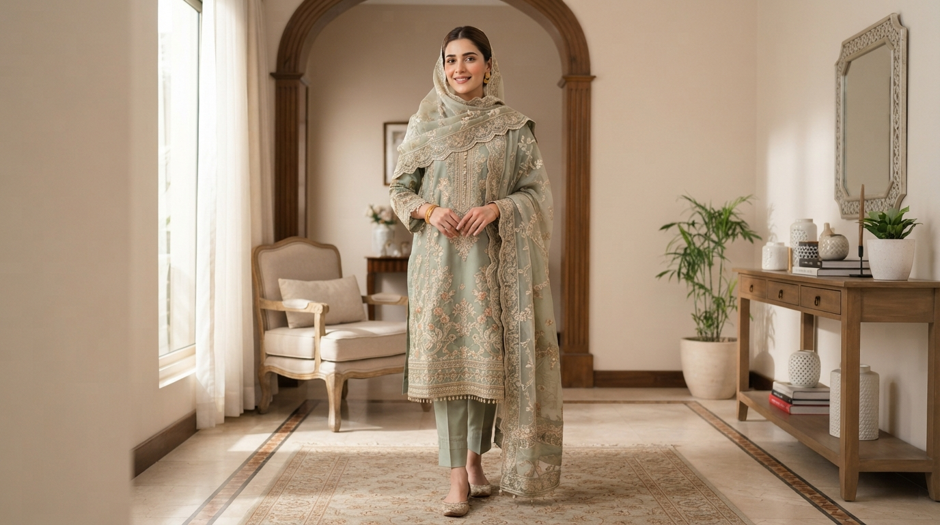
Family Gatherings and Dinners
In this case, you would need something that makes you stand out a little but without being in direct competition with the hosts. The trick lies in choosing something more colorful or adding embroidery. Go for a shirt that has some design work on its collar, sleeves or even daman, and a dupatta with some design or embroidery work on it.
Eid and Festive Events
Eid clothing lies between regular clothing and complete wedding attire. The festive suit tends to be heavily embroidered and is made in deeper shades or colours, together with the dupatta which is also decorated to some extent. As Eid is an event where people tend to get ready early in the morning and attend a number of engagements, it is better to opt for clothing that does not make you feel uncomfortable due to its heaviness.
Weddings and Formal Events
The heavily embroidered stitched suit should never be considered a bridal outfit or a formal suit. Being a guest, one would like to have an attire that is dressier than the festive attire but will not overshadow the family hosting the occasion.
What to choose:
• Heavy or all over embroidery, or a suit with an intricately designed front
• Dressier material of dupatta, like net, organza or chiffon, having detailing on it
• Richer color scheme or pastel colors with work done on it
• Trousers matching with the suit’s colors
How to Choose the Right Fabric for the Season
The climate of Pakistan varies greatly, and it is through the fabric that an otherwise attractive suit will usually fall short. The same design may be enjoyable in March and intolerable in July.
Summer. Lawn is preferred for its lightweight and breathability. Cotton is similar and usually more durable. Linen is breathable too but wrinkled, making it appropriate for those who prefer casual dressing.
Spring and early autumn. This season requires the use of fabrics such as cambric and light cotton, which are generally slightly heavier than lawn.
Monsoon: The problem is humidity. Go for materials which can dry fast and do not stick. Also, keep away from embroidery which will stay wet. Colors like darker or midtones will perform better in case of splashes compared to lighter ones.
Winter: Khaddar and karandi are commonly used fabrics during winter due to their thickness and ability to retain heat as compared to lawn.
The fabric choice will determine the maintenance procedure as well. Lighter cotton fabrics tend to be easy to launder. Embellished or delicate suits may require more careful washing, which is why you should consult the label first.
Printed or Embroidered? Choosing the Right Design
Neither is better. They answer different needs.
Printed suits are excellent for everyday use, university, office, and casual gatherings. Printed suits are usually lighter, easier to clean and forgive minor stains, and a decent print is interesting to look at without any extra effort on your side. The drawback is formality. The best print will never look formal enough.
Embroidered suits are perfect for Eid, dinner, wedding, and any other gathering when you want to show the craftsmanship. Embroidery adds complexity to your suit, but the amount and position are important. The suit embroidered only around the collar area can still be worn at a family lunch, but not vice versa.
A useful test: if you would feel the need to explain your outfit at a casual gathering, the embellishment is probably too heavy for it. If you would feel underdressed at a wedding, the suit is probably too simple.
How to Choose the Right Colours
Colour rules in Pakistani fashion are guidelines, not laws, but a few patterns hold up:
• Daylight: Lighter and soft colors like pastels, off white, powder blue, and subdued greens appear fresh during the day and usually appear cooler in summer.
• Evenings: Darker shades like maroon, bottle green, navy, and plum work well under indoor lights as well as in pictures.
• Summer: Light and medium shades reflect heat better than darker ones.
• Winter: Rich and deeper colors go well with heavy fabric, and neutral shades like mustard, rust, and olive are often used.
• For Festive Occasions: Bright and deep colors indicate celebration.
• For Everyday Wear: Neutral and medium shades are more easy to wear repeatedly and coordinate.
The contrast amongst the three helps create the overall style. A matching combination of shirt, trouser, and dupatta in the same color range gives an elegant and elongated effect. The contrasting dupatta gives an upward attraction and also adds variety. However, if there are many clashing colors, it might become cluttered. In case you are confused, match any two pieces out of three.
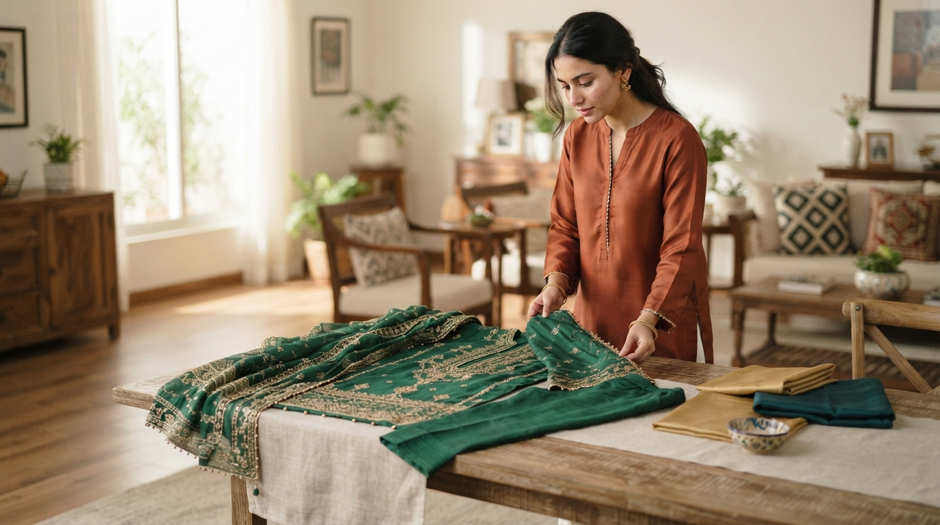
Don’t Ignore the Dupatta and Trouser
People often choose the shirt and treat the other two pieces as an afterthought. They shouldn’t, because both change how the outfit reads.
Dupatta. A plain dupatta helps balance a flamboyant shirt. Print and border dupattas help bring life into plain shirts. The fabric also influences the look. If the dupatta is made from cotton or lawn then it brings a casual feel, whereas, chiffon, net or organza dupatta looks more sophisticated. The borders on dupatta add detail and define the outfit. Too much work on the dupatta, however, with a lot of work done on the shirt can make your look look overworked. Also keep in mind the width and the length of the dupatta because a narrow dupatta cannot be draped easily.
Trouser. Straight trousers create a streamlined look and match well with long kameez, which makes them easy to wear on a daily basis. Wide trousers, flared or palazzo trousers make the outfit look dynamic. Same color trousers and shirts coordinate well, whereas, different colored trousers give a more planned look.
As a rule of thumb, let one piece lead. If the shirt is heavily embroidered, keep the trouser and dupatta simpler. If the dupatta is the highlight, let the shirt stay quieter.
3-Piece Suit Ideas for Different Pakistani Occasions
Use this as a starting point and adjust it to your taste and climate.
| Occasion | Recommended Style | Fabric Direction | Design | Colour Direction |
| University/college | Straight cut, easy to move in | Lawn or cotton | Simple print or minimal detail | Soft or mid-tones |
| Office | Structured, mid-length | Cotton or cambric | Solid or subtle print, light embroidery | Neutrals, muted shades |
| Casual shopping | Relaxed, comfortable | Lawn or cotton | Light to mid-tones | |
| Family lunch | Neat, slightly elevated | Cambric or fine cotton | Light embroidery or border | Pastels or soft jewel tones |
| Dinner | Polished, evening-ready | Fine fabric with some body | Moderate embroidery | Deeper tones |
| Eid | Festive, comfortable for long hours | Breathable with embroidery | Neckline and dupatta detail | Brighter or rich shades |
| Mehndi | Colourful, playful, easy to move in | Lightweight embellished fabrics | Embroidery with bright dupatta | Vibrant colours |
| Wedding guest | Dressy, coordinated | Dressier base with net or organza dupatta | Heavier embroidery | Rich tones or detailed pastels |
| Formal gathering | Elegant, structured | Refined fabrics | Selective embroidery | Deep or classic tones |
What to Check Before Buying a Stitched 3-Piece Suit Online
Buying online removes the chance to touch the fabric and try the fit, so the product page has to make up for it. Before you order, look for:
• Size chart and measurement details. Determine whether the chart indicates the measurement of body or that of garment since both of them are not same. Measure the chest, length and sleeves of the shirt and match them with your existing kameez.
• Trousers measurement details. Measure the waist, length and bottom circumference. Length of the trousers differs from brand to brand.
• Fabric specifications. Find out the name of fabric and the weight or quality of the fabric. “Lawn” and “Cambric” have different textures.
• Dupatta specifications. Check the dupatta fabric, dimension and embroidery.
• Multiple images. Look for the images that contain close up shots of the embroidery and the fabric and back view of the shirt.
• Color representation. The screens may vary. You can check the color of the suit from the main image and the close up shots.
• Suit stitching details. Check whether the suit is fully stitched or not, and there is any margin left for alteration or not.
• Policy on return and exchange. Check the seller’s policy before buying since the policies of different sellers may differ. Always rely on the policy pages and product description of the store (like JamshedBhai) while checking for any information.
If something important isn’t stated, such as a measurement or fabric type, ask the seller before purchasing.
Common Mistakes Women Make When Choosing a 3-Piece Suit
Making choices based on color alone. A pretty color in an unsuitable material will make you feel uncomfortable within the day.
Ignoring the season. Choosing a thick material in July or thin in January is one reason why a nice suit will remain in your closet.
Dressing up for non-special occasions. Excessively decorated suits are worn infrequently because of the excesses in them, making them an expensive purchase for one use only.
Assuming you do not require measurements. Taking your normal size in each suit will land you into trouble because sizes differ.
Not considering the dupatta. Your perfect shirt may not work well when the dupatta is either too light, stiff, or the wrong fit.
Wearing the suit to follow the trend rather than to meet the occasion. A suit that was trendy on social media might look wrong at a family gathering.
Neglecting the product specifications. This information that would save you from the disappointment is normally written somewhere.
How to Build a Versatile 3-Piece Suit Wardrobe
No man needs to wear hundreds of suits in his life; just a few good quality, strategically bought ones should serve the purpose:
1. An everyday printed suit made in lawn or cotton because this is the suit you would use and launder the most often, so comfort and convenience come first.
2. A semi-formal suit for formal work or professional use, having a cleaner design in a more structured material.
3. A festive suit with embroidery on it along with a festive dupatta, which can be used in Eid, dinner parties and other family occasions.
4. A winter suit made in a heavier material like khaddar or karandi so that the winters do not compel you to wear inappropriate clothes.
5. One soft color suit to have in stock for every season and event.
Whenever you choose to buy new ones to complete the collection, keep the gap and variety in mind, and not duplication. For instance, if you have three printed suits for summer, then adding an embroidered or winter suit will make much more sense than adding another printed suit.
Frequently Asked Questions
What type of 3-piece suit is best for everyday wear?
A printed suit in lawn or cotton with a straight, comfortable cut and minimal embellishment. It is light, easy to wash and practical for daily movement.
Which fabric is best for 3-piece suits in summer?
Lawn and cotton are the most common choices because they are lightweight and breathable. Linen is also airy but wrinkles more easily.
Are embroidered 3-piece suits suitable for weddings?
Yes, particularly as a guest outfit. Choose denser embroidery and a dressier dupatta, and keep in mind that a stitched embroidered suit is different from full bridal or formal wedding wear.
What should I check before buying a stitched suit online?
The size chart and garment measurements, fabric type, dupatta details, clear product photos, stitching information and the seller’s return and delivery policies.
What colours work best for daytime events?
Lighter and softer shades such as pastels, off-white and muted greens tend to look fresh in daylight. These are tendencies, not rules.
How do I choose a 3-piece suit for a wedding guest look?
Pick a dressier fabric, richer or detailed colours and noticeable embroidery. Coordinate the dupatta and trouser so the outfit looks complete, and avoid competing with the wedding party’s own attire.
What is the difference between casual and formal 3-piece suits?
Casual suits use lighter fabrics, prints and minimal detail, built for comfort. Formal suits use dressier fabrics, heavier embroidery and more coordinated styling, built for events.