
How to Choose the Perfect 3-Piece Stitched Suit: A Complete Guide
Selecting a suitable stitched suit may not be an easy task as one expects to find it online. Your shirt may appear fantastic in the picture, but you might end up being disappointed with it when you receive it since it might be made from the wrong material, have sleeves that are too tight or even have dupattas that do not match your desired color.
The following is a guide on how to select a suitable stitched 3-piece suit based on some critical factors.
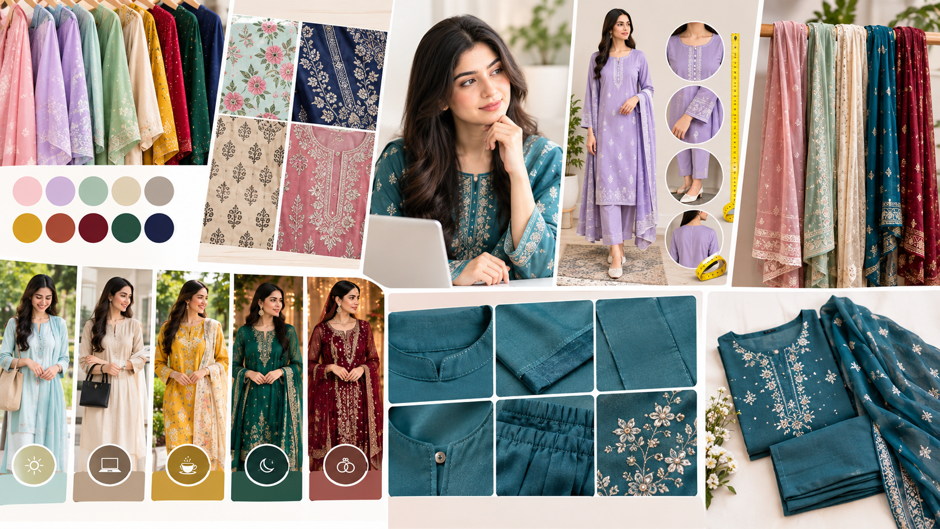
What Is a 3-Piece Stitched Suit?
A 3 piece suit comprises of:
• Shirt (kameez) – the main top part
• Trouser/shalwar – the trouser/stitched according to the shirt
• Dupatta – the final piece which adds to the whole look
The advantage of the ready to wear 3 piece suit is that of convenience. Rather than buying unstitched pieces of material which will be stitched by a tailor, one can purchase a ready made suit, thus saving a lot of time. This is why women who work and students find the stitched 3 piece suits very convenient.
1. Choose the Right Fabric
Fabric choice determines how comfortable — and how fitting — your suit will be to the weather and the occasion.
• Lawn and cotton – airy and lightweight, suitable for summer weather in Pakistan
• Cambric – slightly heavy than lawn but comfortable to wear on a regular basis
• Linen and khaddar – best during winter due to their heat-generating property
• Chiffon and silk – best for formal events and not on a regular basis as they are delicate fabrics
In case of purchase of daily wear, you should focus on comfort and easy washing.
2. Consider the Occasion
A single style of the suit won’t work across all places; this is okay because what is required is pairing of the suit with the right kind of place.
• For daily use: Simple prints and colors and soft cotton fabrics with no much embellishment.
• For office: Shirts that are more structured with modest necklines and colors that come out well in photos.
• For a casual setting: Can have a little more print or color but should be comfortable for eating and sitting in.
• Eid and special occasions: More color, simple embroidery, and block prints.
• For weddings: Embellished with heavier embroidery, silk dupatta.
Thinking of the event first makes it easier to choose the fabrics and designs for the suit.
3. Select a Color That Suits You
Color is an aspect where individual preferences should outweigh current fashion trends.
• Pastel colors are appropriate for daytime occasions and for warm weather clothes
• Neutral colors such as beige, white, and gray are versatile and can be styled repeatedly
• Strong and bold colors are fitting for joyful occasions and bring vitality to casual activities
• Dark colors such as maroon, bottle green, and navy appear more elegant and are suitable for cool weather
Instead of buying clothes in currently trending colors, choose those which you like wearing and that are good for your skin complexion.
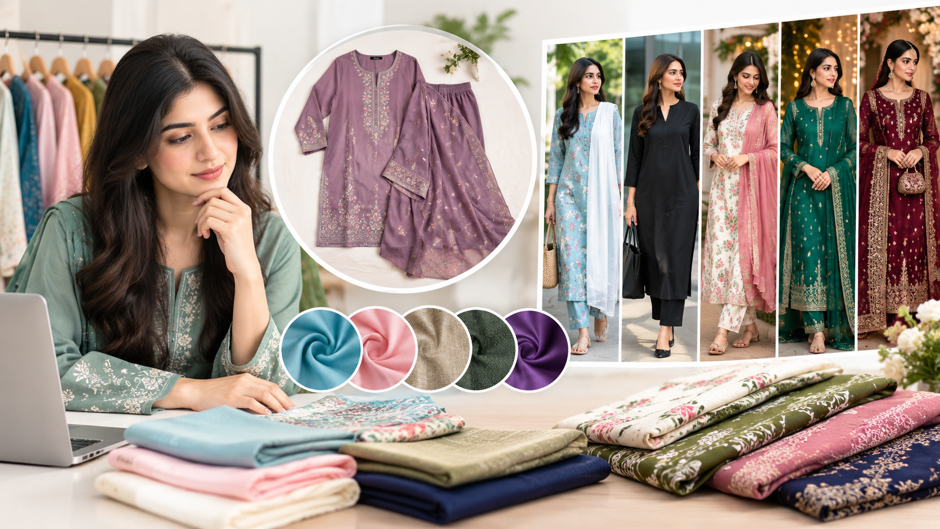
4. Pay Attention to Prints and Embroidery
These prints and embroideries completely transform the whole persona of the suit.
Digital prints, block prints, embroidered necklines, and borders each play different roles.
For daily and office wear, opt for more subtle prints and minimal embroidery, so it does not appear to be overwhelming by the afternoon. However, for an event such as Eid, more intricate embroidery in the neckline or borders, or even prints all over the outfit would do the trick.
5. Choose the Right Fit and Size
Fitting is a bigger factor in terms of how a suit appears than the design itself. No matter how elaborate a suit is, it will not look good if it is ill-fitted.
Remember to consider:
• Length of shirt – according to height and silhouette that you prefer
• Length of sleeve – whether full, three-quarters or short
• Fitting on shoulder – not too tight and does not slip
• Type of trouser – whether straight, cigarette or shalwar
• Correct measurements – always check the measurement charts of the brand and not just rely on what your size usually is because each brand has different size ranges
If you purchase online, measurements are more important than size labels since there is always a possibility that a medium size of a particular brand would fit differently compared to other brands.
6. Don’t Overlook the Dupatta
Dupatta often receives the least amount of attention, yet it is the item that completes the outfit. It needs to be made of a comfortable fabric to wear for hours and to match – rather than clash – with the shirt.
It is possible to create a complete outfit using a simple shirt and a decorated dupatta or an intricate shirt and a simple dupatta.
7. Check Stitching and Overall Quality
Prior to making your purchase, either online or otherwise, check for signs of good construction:
• Nicely and evenly stitched seams
• Well-stitched seams that will not easily come apart from regular wear and tear
• Well-finished hems and seam edges
• Good shape and fit to the neck area
• Well-finished sleeves that are free of loose threads
• Well-stitched trousers
• Nicely embroidered with no loose threads or pulling
• Fabric that is true to the image displayed in photographs
The product description and any reviews available will give you some idea about the stitching consistency of a brand.
8. Choose According to the Season
- Summer: Lawn, cotton, and cambric in lighter colors
- Winter: Khaddar and linen in deeper tones
- Spring: Lighter cottons in pastel or floral prints
- Festive seasons: Chiffon, silk, or heavier cottons with embellishment
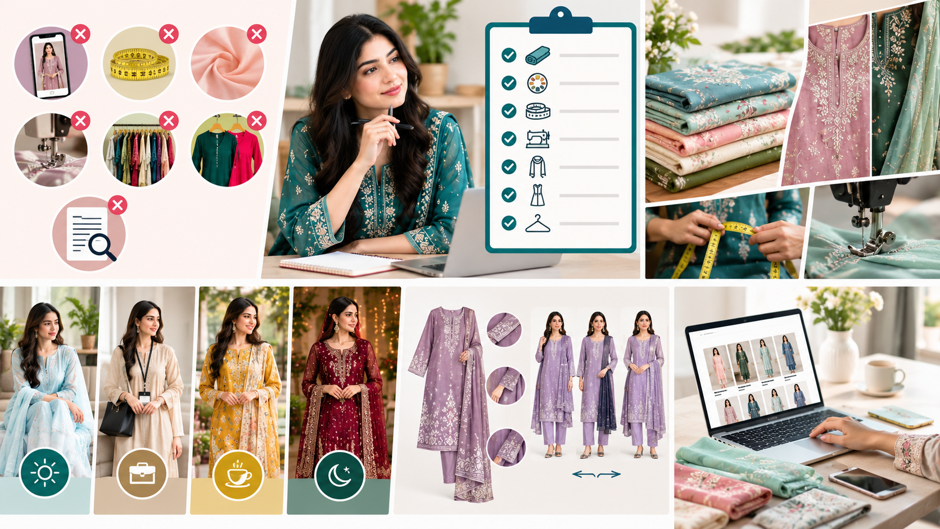
9. Think About Versatility
A suit that can be restyled works harder for your wardrobe. Consider how a piece pairs with different footwear, jewelry, or even a different dupatta draping style. Neutral or classic prints tend to offer the most flexibility across occasions.
Common Mistakes to Avoid When Buying a 3-Piece Stitched Suit
• Basing the choice of a suit solely on its appearance in pictures without verifying the fabric
• Skipping the measurements and assuming that your regular size will do
• Selecting chiffon and silk as a material for daily use and discovering its impracticality
• Bypassing sewing quality in favor of a great design
• Conforming to all fashion trends seasonally instead of choosing appropriate clothes for yourself
• Creating contrasts of style when selecting clothing; wearing bright colors for formal offices or dull tones for informal occasions
• Failing to read product descriptions completely before making an order
Final Checklist Before Buying
- Fabric suits the season and occasion
- Color complements your skin tone and the event
- Measurements checked against the size chart
- Stitching and finishing look reliable
- Dupatta complements the shirt and trouser
- Design matches the level of formality needed
- Suit can be styled more than one way
Conclusion
The decision on which 3 piece stitched suit to purchase all boils down to a few key considerations: choose the fabric based on the season, ensure that the design suits the occasion, ensure fit rather than fashion, and do not forget to consider the stitching. If all the above are well taken care of, then color or print choice is no big deal.
For those who are considering Pakistani stitched suits for their regular wear, office wear, or Eid and weddings, there is something at JamshadBhai.com worth considering.
Frequently Asked Questions
1. What is included in a 3-piece stitched suit?
It typically includes a stitched shirt, matching or coordinated trouser, and a dupatta — a complete, ready-to-wear outfit.
2. Which fabric is best for a 3-piece suit in summer?
Lawn and cotton are the most practical choices, as they’re lightweight and breathable in hot weather. Cambric is a good middle ground for everyday comfort.
3. How do I choose the right size for a stitched suit online?
Compare your actual body measurements to the brand’s size chart rather than relying on your usual size label, since sizing varies between brands.
4. Which 3-piece suits are suitable for formal occasions?
Suits in silk or chiffon with embroidered necklines or embellished borders generally work well for weddings and formal events.
5. How can I style a Pakistani 3-piece stitched suit?
Change up the dupatta drape, switch footwear between heels and flats depending on the setting, and add or remove jewelry to shift the outfit from casual to formal